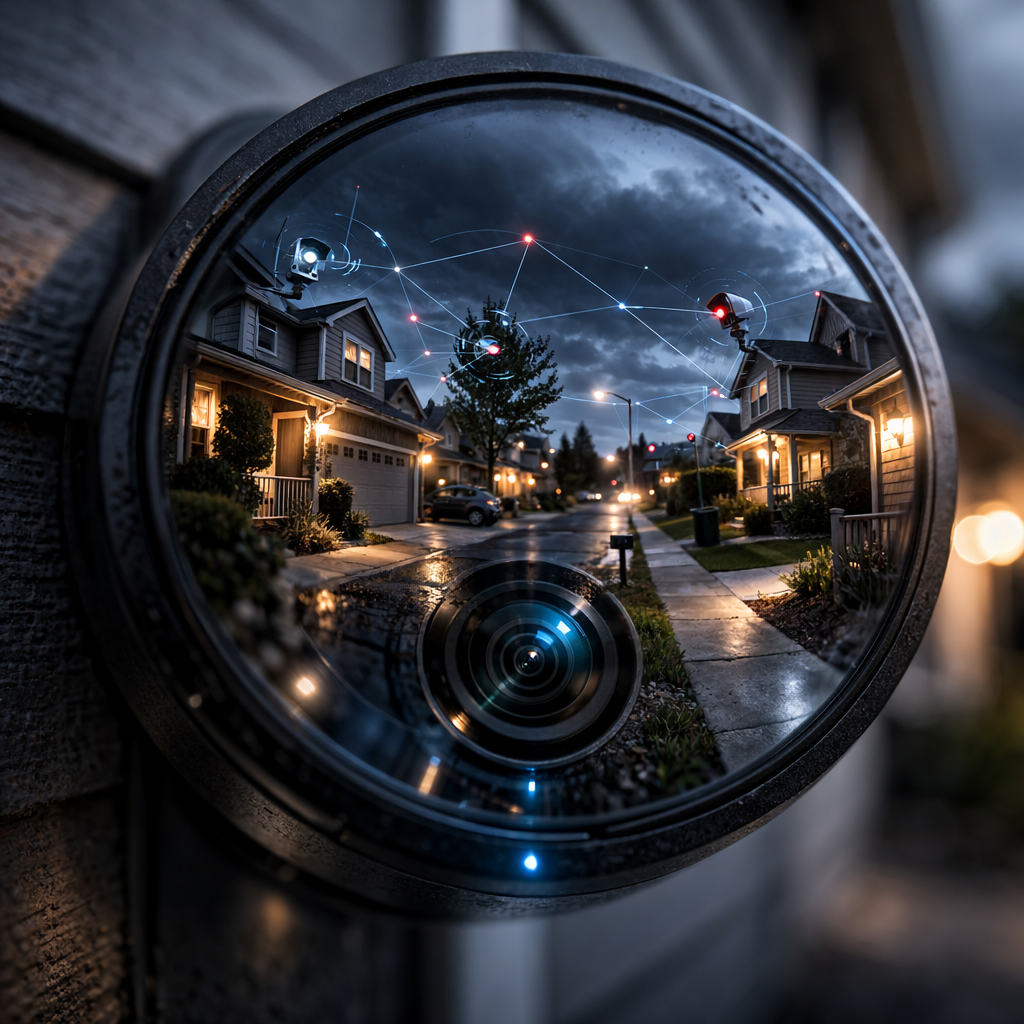
I was an early believer. Back in 2015, I reviewed the Ring Video Doorbell on TVNZ Breakfast — sandwiched between Glideboards (remember those?) and a TomTom running watch with music storage. Even in that company, Ring stood out. Here's what I wrote at the time:
"This revolutionary internet-connected doorbell streams live audio and video of your home's front doorstep directly to any smartphone or tablet. Ring sends instant alerts via the free app when the doorbell is rung or motion is detected. You can see and speak with people at your house from anywhere — even overseas."
I loved it. I recommended it. I told busy parents, home workers, security-conscious Kiwis: this one's worth it.
Friends and family got them too, and Ring became just part of the furniture — as ubiquitous as a smart TV that's definitely watching you back. I ended up with two cameras myself: one covering my courtyard, one inside the house. At $26 a month over several years, I stopped questioning it. You stop thinking about what it actually is.
A couple of things cropped up along the way that should have concerned me more. After being taken over by Amazon, Ring devices added a feature that shared your WiFi bandwidth with surrounding Ring devices across the neighbourhood — sold as a feature, not a concern. Your electricity, your broadband, your bill. Then there was Amazon Key, launched in 2017, which let delivery drivers unlock your front door and drop packages inside your empty home. Ring wasn't involved initially, but Amazon acquired it shortly after — and suddenly the company that wanted a key to your house also owned the camera watching your street.
What finally broke through my complacency were two things in quick succession. The plan to connect Ring to Flock Safety in the US — a law enforcement surveillance company — would have allowed police agencies to request footage directly from users' cameras, with concerns that data could reach ICE and other federal agencies. Ring cancelled it before launch, insisting no footage was ever shared. But they'd already been handing footage to law enforcement without warrants for years, only stopping in 2024. The intent had been visible for a long time.
Then came the 2026 Super Bowl ad. Ring's "Search Party" feature was showcased in a slick, heartwarming spot about a family finding their lost dog — by activating neighbouring Ring cameras and using AI to scan footage for a canine match. People called it spyware with a cute dog filter. They weren't wrong. Ring already has facial recognition built into its "Familiar Faces" feature. The ad was a preview of street-level biometric surveillance, repackaged as a feel-good story about pets.
Here's where I'll acknowledge my own hypocrisy. I work in an industry where tracking and profiling user behaviour is monetised. Apps read your location, advertisers build a picture of you over time — surveillance capitalism, quietly accepted as the price of free services. But with most ad tracking, the surveillance is a byproduct. With Ring, the surveillance is the feature. You're actively installing cameras pointed at your street, your neighbours, their visitors — and handing that infrastructure to a company with a proven track record of sharing it freely. The US FTC made this explicit in 2023 when Ring settled charges over employees freely accessing customer footage — including thousands of recordings from women's bedrooms and bathrooms. Ring paid $5.8 million. Not exactly a glowing endorsement of the product you've mounted on your wall.
The wide-eyed nineties gave way to the data-driven 2000s, and any conviction that you owned your own data evaporated quickly. We mostly shrugged as the products seemed to make our lives easier. Ring just takes that logic to its conclusion — it's not mining your browsing history, it's pointed at your street. For Kiwis, the most acute risk is reduced: NZ Police confirmed to RNZ they have no direct access to Ring footage via Amazon, and non-US police must go through US Justice Department channels. Small comfort.
I was an early believer. I've spent years paying for the privilege. But there's a version of technology that genuinely improves your life, and a version that uses your life to improve someone else's product. Ring started as the first thing. It's become the second.
The cameras are going in the bin. Not up for sale — I wouldn't feel right passing them on.