Two pieces of news arrived within days of each other that, read separately, look like reasonable progress on a difficult problem. Read together, they reveal something more significant about where the value in online publishing is flowing — and who is capturing it.
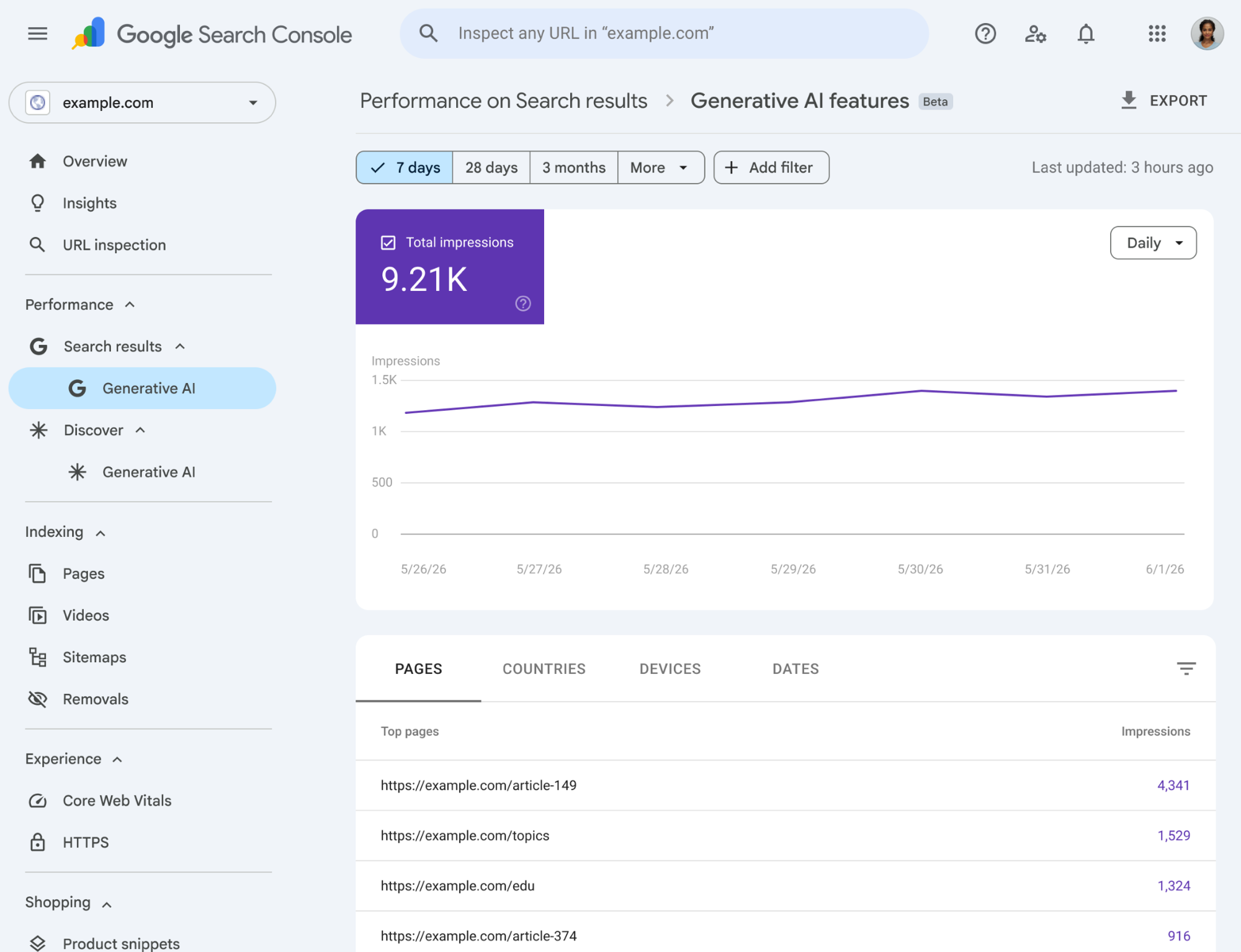
The first: the UK's Competition and Markets Authority issued a world-first ruling requiring Google to let publishers opt out of having their content used in AI Overviews — the AI-generated summaries that now dominate the top of search results — without losing their rankings in regular search. The second: Google began testing new controls inside Search Console with a subset of UK-based publishers, giving them a dashboard to see which of their pages appear in AI features, and a toggle to block their content from those features entirely. The intention is to roll these controls out globally once the trial is complete.
Both are genuine steps forward. The CMA ruling has real teeth — Google has nine months to comply, with mandatory progress reporting. The Search Console tools give publishers visibility they did not have before.
What both developments have in common is that they're a response to the same underlying issue — publisher content has been powering Google's AI answers without generating the traffic a traditional search result would have.
The Deal That Changed Without Notice
For most of the internet's commercial life, there was a reasonably straightforward arrangement between Google and publishers. Publishers created content, Google indexed it and sent users their way, and both sides got something out of it — publishers got traffic and ad revenue, Google got a more useful product.
AI Overviews have complicated that arrangement considerably. Google now uses publisher content to construct direct answers served at the top of results, before any link is clicked. In many cases the user gets the information without ever visiting the original source.
A 2026 Ahrefs study found a 58 per cent drop in click-through rates for pages that appear alongside AI Overview results. Zero-click searches now account for roughly 60 per cent of all queries. Publisher traffic globally fell 33 per cent year-on-year to November 2025. Some publishers have documented individual query categories where traffic fell by 89 per cent. News publishers, as a sector, expect search referrals to drop 43 per cent by 2029 — figures that point to something more fundamental than a normal algorithm update.
What the New Tools Actually Offer
The new Search Console AI Performance Report shows publishers which pages appear in AI features, how often, and across which devices and countries. What it does not show is clicks.
Google declined to include click attribution — the single most commercially important metric — saying it would "work with website owners to understand what insights will be most helpful." That is a careful piece of language. Because without click data, publishers cannot answer the one question the opt-out decision hinges on: is appearing in an AI Overview actually worth anything commercially?
The opt-out toggle offers a binary choice: stay in AI features and contribute your content without guaranteed clicks, or leave AI features entirely and retain your regular search rankings. The CMA ruling ensures Google cannot penalise you for opting out — and separately requires that any content which does appear in AI results must be properly attributed with clear, working links. The CMA's Sarah Cardell described it as a "world-first requirement" designed to give publishers "appropriate bargaining power over how their content is used." But it does not change the underlying maths. Opting out does not restore lost traffic — it stops a haemorrhage through one channel while leaving the cause untreated.
Where This Leaves New Zealand
The CMA ruling is a UK-specific intervention. It does not automatically extend to New Zealand. To date, there has been no equivalent pressure from the Commerce Commission to force the same protections locally — and NZ publishers have the same exposure to AI Overview traffic impacts as their UK counterparts, but none of the regulatory backstop those publishers just secured.
Google holds over 94 per cent of New Zealand's search market. There is no meaningful alternative platform for publishers or businesses to pivot toward. That concentration of market power is precisely why the UK regulator moved — and it is precisely the argument New Zealand's publishing industry should be making locally, both individually and through industry bodies.
The NZ Commerce Commission has been watching digital platform regulation globally, but has not moved at the same pace, which leaves local publishers without the same protections their UK counterparts just secured.
What Online Businesses Need to Do Now
For businesses whose growth has depended on Google organic traffic — and in New Zealand, with a 94 per cent Google market share, that covers a very large proportion of ecommerce — the implications are worth taking seriously.
Google organic search helped build an enormous number of New Zealand online businesses over the past two decades. The ability to rank well for product searches, category queries, and the informational content that sits upstream of purchase decisions was effectively a free customer acquisition channel. That channel has been narrowing, largely because Google is increasingly providing the answer itself and keeping the user on its own page rather than sending them through.
The businesses most exposed are those whose content is primarily informational: product guides, how-to articles, comparison pages, category explainers. These are precisely the query types where AI Overviews are most active and where the 58 per cent click-through decline is most acute.
Three things worth prioritising now:
Build direct audience relationships before you need them. Email lists, loyalty programmes, push notifications, app installs. The channel that does not depend on another platform's algorithm holds its value when those algorithms shift. If your customer relationship currently runs primarily through Google, you are renting that relationship, not owning it.
Invest in content AI cannot compress. Original research, proprietary data, expert opinion from named people, genuine product testing with real conclusions. Depth that cannot be summarised in three sentences. This is harder to produce — which is exactly why it is harder to displace. A well-reported piece of original analysis is significantly more resilient than a how-to article assembled from common knowledge.
Revisit your paid search assumptions. As organic traffic declines, the cost of replacing it through paid channels will rise — and it is worth noting that Google benefits from that dynamic regardless of how the AI Overview debate resolves. Businesses that invest in brand now — so customers search for them directly rather than generically — are in a structurally better position. A search for your brand name is far more resilient than a search for a category term that AI can answer.
The Bigger Question Still Unanswered
The UK just established that publishers have the right to opt out of Google's AI features without being penalised for it. That is meaningful, and it required a regulator with significant powers to extract it. What it does not resolve is the more fundamental question: who owns the value that publisher content creates in an AI search ecosystem?
The tools being offered — impressions data without clicks, an opt-out without compensation — look more like the opening of a longer negotiation than the resolution of one. Watching how UK publishers use them, and how Google responds over the nine months of CMA-mandated compliance, will be worth following closely.
For New Zealand publishers and businesses, the more practical point is that the traffic shifts don't wait for regulatory outcomes. Building direct audience relationships, owned channels, and content depth takes time — and the sooner that work starts, the less dependent the business is on how the Google situation eventually resolves.