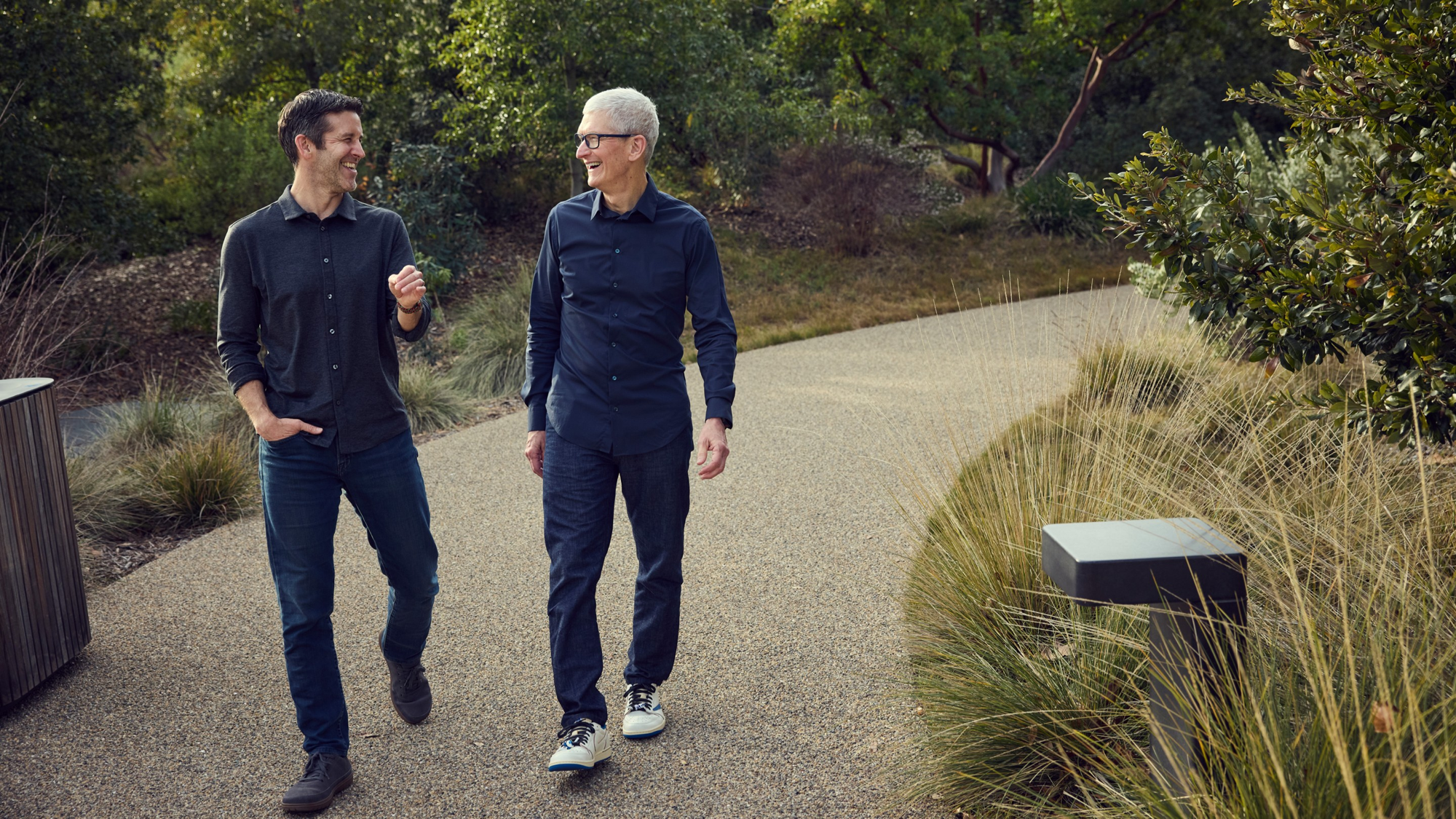
Apple announced on Monday that Tim Cook will step down as CEO on September 1, 2026, transitioning to the role of Executive Chairman. John Ternus, Apple's Senior Vice President of Hardware Engineering, will take over as Chief Executive. The move, approved unanimously by the board, follows what Apple describes as a long-term succession planning process — and frankly, for a company of Apple's scale, it shows.
Cook joined Apple in 1998, becoming CEO in August 2011 following Steve Jobs's resignation. In the nearly 15 years since, he has overseen one of the most remarkable runs in corporate history. Under his stewardship, Apple's market capitalisation grew from roughly $350 billion to $4 trillion — a more than 1,000% increase. Annual revenue nearly quadrupled, from $108 billion in fiscal year 2011 to more than $416 billion in fiscal year 2025.
The numbers are almost too large to be meaningful. But they reflect something very real: Tim Cook didn't just maintain what Steve Jobs built. He scaled it into something Jobs never could have.
The Operator Who Became a Visionary
Cook came to Apple not as a designer or an inventor, but as an operations genius. Before becoming CEO he had already transformed Apple's supply chain — closing factories and warehouses, reducing inventory cycles from months to days, and consolidating the supplier base to extract both better pricing and better quality. It was unglamorous work, but it created the financial engine that powered everything else.
That supply chain instinct never left him. As trade tensions and tariffs reshaped global manufacturing, Cook quietly and methodically diversified Apple's production footprint. By 2025, the majority of iPhones sold in the US were being manufactured in India — a strategic shift that took years of patient negotiation and investment, and one that has proven prescient as China-US trade relations have continued to deteriorate. He also pledged $600 billion in expanding Apple's US footprint, navigating political pressure from Washington with characteristic composure.
The Products and Categories He Built
The narrative that Cook merely managed Jobs's legacy rather than extending it doesn't hold up to scrutiny. Under his watch, Apple launched entire new product categories. Apple Watch arrived in 2015 and is now the world's most popular watch. AirPods, launched in 2016, redefined the wireless audio market and have since evolved into an over-the-counter hearing health system. Apple Vision Pro arrived in 2024 as a first-generation bet on spatial computing.
On the services side, Cook oversaw the growth of iCloud, Apple Pay, Apple TV+, and Apple Music into a business worth more than $100 billion annually — the equivalent of a Fortune 40 company operating inside Apple. When Jobs died, services were barely a footnote. Today they are central to Apple's recurring revenue story and its sky-high valuation.
Cook also oversaw the transition to Apple Silicon — a move that gave Apple full control over the chips powering its Macs, and which delivered generational leaps in performance and power efficiency. It was a technically risky, strategically bold decision, and it paid off completely.
More Than the Margin
What often gets lost in the financial story is the degree to which Cook shaped Apple's values, not just its bottom line. He made privacy a genuine differentiator — positioning Apple as the technology company that does not monetise your data — and backed it with real product decisions, from App Tracking Transparency to on-device AI processing. In an industry frequently accused of extracting value from users rather than creating it, that stance has mattered.
He also pushed Apple's environmental commitments further than most companies in its class, reducing its carbon footprint by more than 60% below 2015 levels during a period when revenue nearly doubled. Whether you view that as genuine leadership or sophisticated brand management — it's probably both — the scale of it is undeniable.
What Comes Next
John Ternus joined Apple in 2001, working his way from the product design team to SVP of Hardware Engineering. He has been instrumental in the MacBook Neo, the iPhone 17 lineup including the iPhone Air, and advances in AirPods. His background is squarely in hardware — he is, as Cook noted, an engineer at heart.
The challenge Ternus inherits is a familiar one for Apple: what's the next truly new thing? The AI race is intensifying, and Apple's progress has at times felt slower and more cautious than the moment demands. The Vision Pro remains a platform looking for its mass-market use case. And with a $4 trillion valuation, the expectations baked into the share price leave little room for drift.
Cook, for his part, moves to Executive Chairman — a role that will keep him close to policymakers and boardrooms globally, where his relationships and reputation carry enormous weight. It's not a retirement. It's a handoff.
Fifteen years ago, the question was whether anyone could follow Steve Jobs. The answer, it turned out, was yes — and the result was the most profitable era in Apple's history. Now the question is whether anyone can follow Tim Cook. Based on the succession process Apple has run, and the candidate they've chosen, there's reason to believe they've thought about this one carefully too.
"It has been the greatest privilege of my life to be the CEO of Apple and to have been trusted to lead such an extraordinary company." — Tim Cook